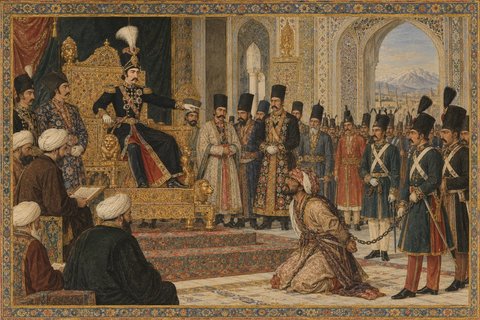
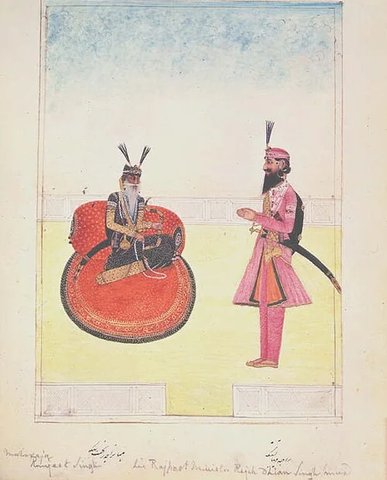
In a suprising diplomatic move, the Rajah Ranjit Singh of Khalsa Raj has claimed both sides of the Indus basin, and the Indus river mouth as a rightful diplomatic and geopolitical interest of the Khalsa Raj.
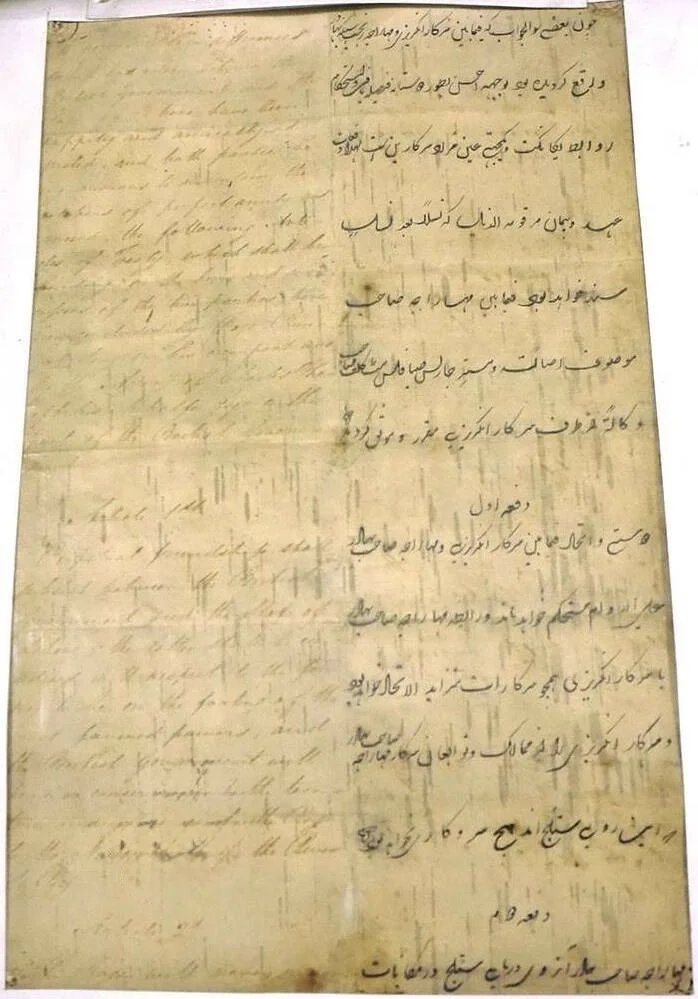
Amid internal pressure and calls for the renewal of the Treaty of Amristar of 1809, Rahaj Ranjit Singh has claimed both sides of the Indus basin, The claim is based on a peculiar interpretation of the Treaty of Amristar of 1809 which states in Article 1 that states the following:
"Perpetual friendship shall subsist between the British Government and the State of Lahore (Khalsa Raj). The latter shall be considered, with respect to the former, to be on the footing of the most favoured powers; and the British Government will have no concern with the territories and subjects of the Rajah to the northward of the River Sutlej".
The logic of the Rajah is that even if the Article 1 literally only applies to the River Sutlej, the River Sutjet is a tributary river and an unseparable part of the Indus river, therefore is it in the spirit of the agreement to apply its logic and principles to the entire Indus basin, and therefore all the minor states in the river sides of the Indus River must be tributaries of the main entity of the Indus basin, the Khalsa Raj or else...
The declaration of Khalsa Raj intention to directly or indirectly control or own both sides of the Indus river basin has led to diplomatic complaints and condemnation by Bahawalpur and Sindh, which have condemned the move as "faulty logic", "reckless" and "an attempt at intimidation using aggresive threats".
The Sindh diplomatic delegation has stated that the Treaty of Amristar or any renewal of it, must be considered and applied by the letter -which keeps the agreement confined to the boundaries of only the "northward of the River Sutlej" and not following an unprecedented "creative interpretation" based on a subjective appeal to "the spirit of the treaty", has called Khalsa's move as "an attempt at intimidation using aggresive threats", has denounced the reckless expansionism and called the whole diplomatic issue as an "attempt of the Khalsa Raj to find an excuse to force Bahawalpur and Sindh to kowtow and become Khalsa's protectorates under the threat of war and direct annexation".
The British Empire and the East India Company have been invited to comment on the diplomatic incident, specially considering that the whole affair started by an interpretation of a previous treaty they signed with the Khalsa Raj authorities, but they have refused to comment or to publish an statement in this newspaper, claiming that:
"After careful deliberation, the British diplomatic team have decided to not comment on the matter until a later date in which more of the current situation has unfolded. Essentially, we are awaiting further information and we are waiting to see how the situation develops."
We are all waiting to see how the situation develops in the Indian subcontinent.