Dear readers:
Our war correspondant has brought us all the most relevant news about the Indian subcontinent and their wars.
We could start with the big news, the tragic death ofthe Sher-e-Punjab: Rahaj Ranjit Singh, killed in 4th Battle of Punjab, but to know how we got into that situation, it's better if we summed up all what happened in an ordered manner through a brief timeline.
On January 5th of 1837, Maratha Empire's Maharajah Pratap Singh Mehere finally decided to iniciate the anticipated hostilities by the sabre-rattling provocation at the Ram Bagh Mahal and formally declared his interest of vassalizing the Khalsa Raj. This inmediately caused fear in Khalsa Raj's Sikh society, who decided to organize an Anti-Marathi society comprised of the Khalsaji and the Petit Bourgeoisie.
On January 6th of 1837, the state of Kunduz decides to declare war on Khalsa Raj.
On February 6th of 1837, the brief war between Kunduz and the Khalsa Raj ends with a complete victory over Kunduz, and the Khalsa Raj annexation of Southern Turkestan.
On May 10th 1837, the Maratha Empire makes a formal declaration of war against the Khalsa Raj. Khalsa Raj offers the province of Kabulistan to Persia in exchange for Persia joining the war. The sides of the war have Maratha Empire as an attacker and Khalsa Raj, Persia and Jammu as defenders.
On June 12th 1837, the 1st Battle of Punjab started and it ended on July 11th as a clear Maratha's victory; Maratha's victory led to a 2nd Battle of Punjab, which was longer and far more decisive, that started on July 21st -ten days after the first ended-, and that ended in September 13th, again, with Maratha's victory.
On September 26th started a brief battle called the 3rd Battle of Punjab, although compared with the lenght of the 2nd, it was almost a skirmish. This minor battle ended in Maratha's victory on October 15th.
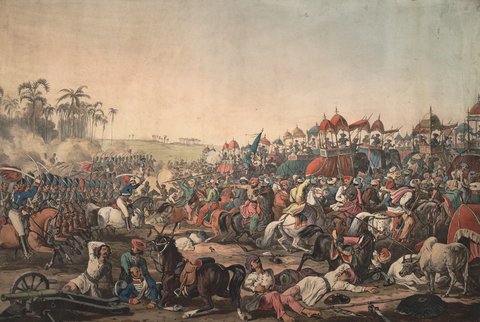
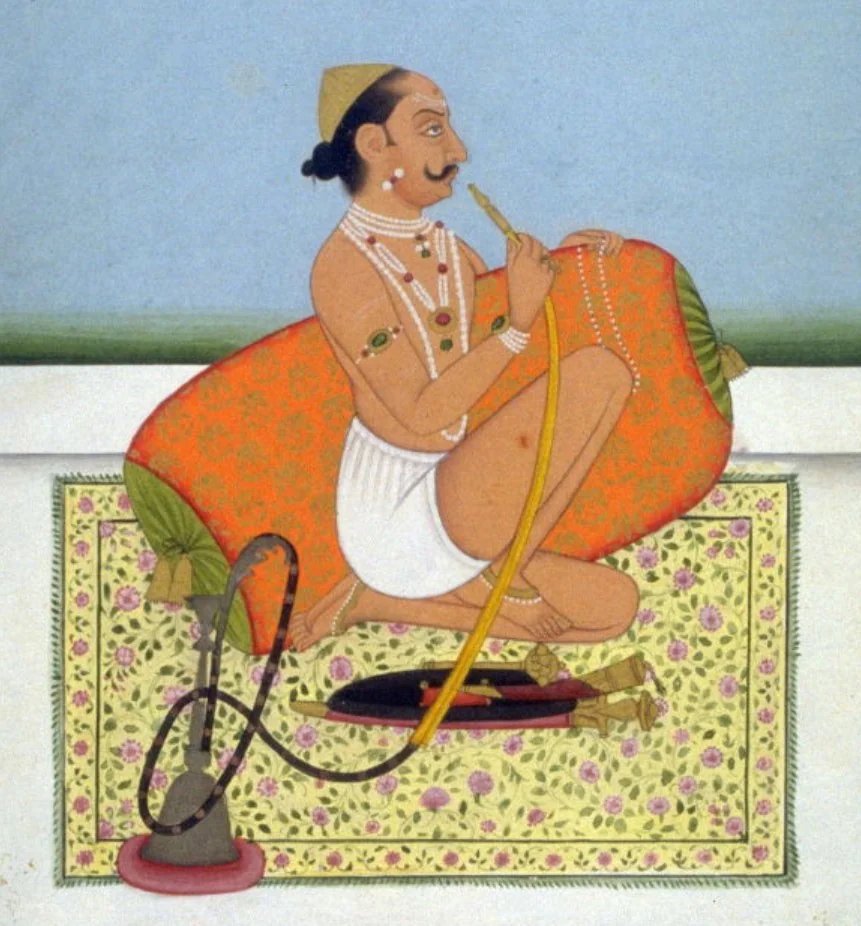
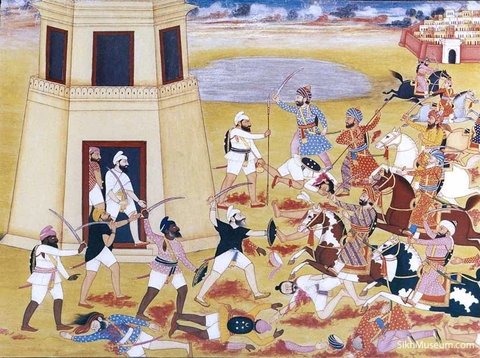
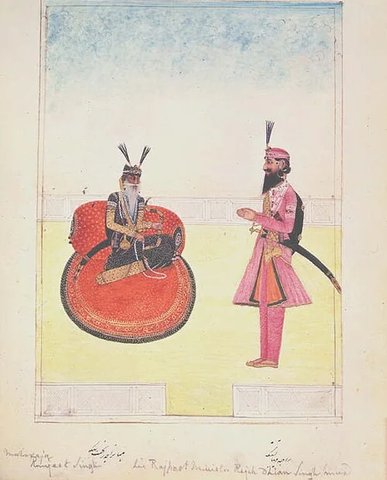
Finally, on October 25 started the longest and most significant battle of the entire war, that directly led to the passing away of the Sikh leader Rahaj Ranjit Singh and may have been the reason of the Khalsa Raj's demise and vasalization. On December 1st, his Sikh majesty Ranjit Singh was killed in a battle by a surprise maneuver done by Marathi General Bajirao Gaekwad while the Rajah was engaged in an attempt to retreat several of his men to prevent encirclement. Rahaj Ranjit Singh heroic brave stand saved the battle, prevented an encirclement and routing and eventually, they allowed a counterattack by the boost in moral that the desire for revenge inspired in the troops. After his death, his son Kharaj Singh became the new Rajah of the Khalsa Raj, although his presence and duration in the charge were to be brief. On January 7th 1838, the 4th Battle of Punjab ends in victory for the Khalsa Raj, the only major victory for the Sikhs, despite of, or perhaps it's better to say, due to Ranjit Singh heroic sacrifice.
However, the hope for a change of the tides of war would soon expire with the Maratha's offensive called the 5th battle for Punjab. The 5th battle started in February 19th of 1838 and ended on March 7 of 1838 with the capture of Lahore and the entrance of Marathi's troops at the Ram Bagh Mahal, the Khalsa's Rajah official palace and residence.
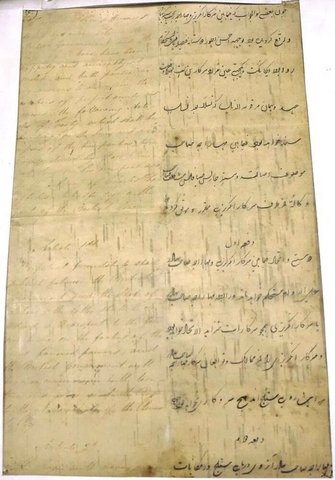
On April 10th, after 15 months of devastating war culminating in the capture of the newly crowned Rajah Kharaj Singh, an armistice was signed in which a clear Maratha's victory over the Khalsa Raj. Khalsa Raj is left with no other option but to become a tributary of the Maratha's Empire
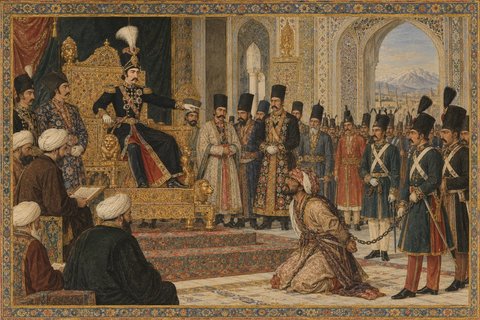
April 10th, a day that will be remembered as a mark and as a humilliation inSikh history, is also the day a new Rahaj is put on the throne of Khalsa Raj, and the day Kharaj Singh is deposed and forced to abdicate the throne and the rights of all of his descendants by force.
Kalpur Nalwai, provenient from a prominent aristocratic landowner family of the Zamindars -the Nalwais- is installed into the Khalsa Raj throneroom by the Maratha's Maharajah Pratap Singh Mehere . Kalpur Nalwai is seen as an illegitimate Rajah and a puppet king by most groups of society, so Kalpur Nalwai tries to get more authonomy from the Maratha's Empire in order to gain more legitimacy and support.
On April 21st, Kharah Singh, former prince and Rajah is now forced into exile by the new authorities of the Khalsa Raj.
To conclude this reporting arriving to the current date, today, on May 1st 1838, a provisional government and cabinet takes place with the objective of stabilizing the realm.
But, will they be able to under such dire and unpopular circunstances? Our next report may tell us.