Dear readers of our newspaper:
Today, we bring you some news coverage about the war of Khalsa Raj and Persian Empire's against Kabul and the sebsequent partition of Kabul between the aforementioned powers, which ended up being different in practice to which was originally stipulated.
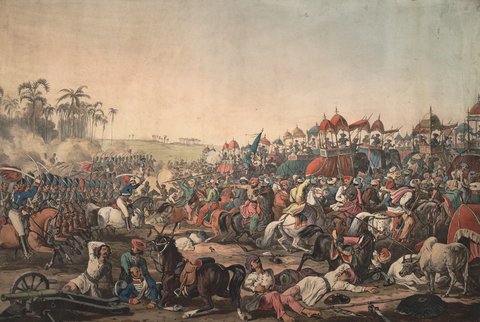
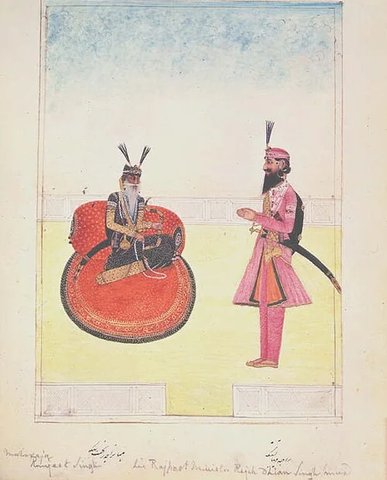
As we've just already reported in our previous covering in the newspaper article named "Kabul soldiers raid the border with the Khalsa Raj and reach Jamrud, we were all aware of the intention of the Khalsa Raj to sent an invasion into Kabul for the previous Pashtun border raid that went far into the internationally recognized borders of the Khalsa Raj, reaching as deep into as Jamrud, so it seems that Khalsa's Rajah, Ranjit Singh, decided to launch a full invasion force to get payback right into deep Kabul territory.
The diplomatic crisis had already started before January 1st 1836, and it was followed by the formal war declaration on April 21st 1836, date in which a formal declaration of war is signed by Rajah Ranjit Singh against Kabul.
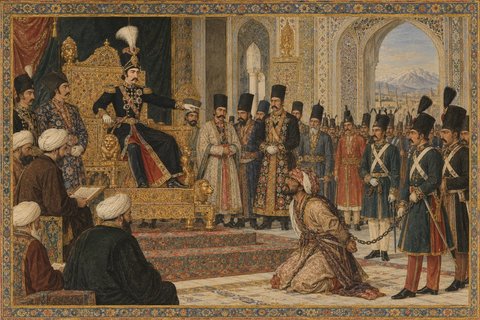
The Emirate of Kabul defenses were easily overwhelmed by a two front side war against the Khalsa Raj and Persia. The failure of the Pasthun Army to provide a meaninful defense translated into a total war capitulation by September 8th to the Khalsa Raj, who got the provinces of Kabul's Pashtunistan, Kabul's Quetta and Kabulistan; and who got followed by Kabul's capitulation to Persia on 10th September, in which Persia got the province of Hazaristan, meaning that the Emirate of Kabul ceased to exist as a state.
However, despite the shared war and victory, the partition and distributions of the Pashtun spoils wasn't done according to the previously offered deal by the Khalsa Raj to Persia, which stated the next:
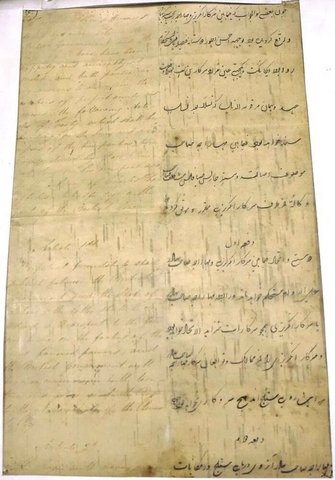
"(The Sikhs) are grateful for your acceptance of our claim on Pashtunistan and Quetta, and we have already agreed that Hazaristan is rightful Persian land, and the Sikhs could contemplate the validity of your historical claims in Kandahar, but not in Kabul, which must be put under Khalsa Raj control due to historical precedent. Therefore, Kabulistan will be under Khalsa Raj control.
About Kandahar, we are willing to recognize your claim and ownership on Kandahar ONLY if all the next conditions are fulfilled:
1- A comprehensive formal agreement has been reached, writen and signed in which all the other Khalsa Raj/ Sikh claims are agreed upon and ratified.
2- Persia drops any claim on Kabulistan.
3- Kandahar, and any other provinces in which the Pashtuns are or will be the majority demographic, will be under constant and permanent violent suppression to prevent any future rebellion from happening (Have the Violent Suppression edict permanently applied in the province of Kandahar and Pashtun majority provinces)
4- There won't be Pashtun soldiers in the Persian Army, all military buildings (Barracks, Army Logistic Center, and so on) in Kandahar are to be permanently closed and dismantled, and no Pashtun will ever reach a significant military position (General, Admiral) in the Persian Army.
5-The government of Persia will refrain from developing Kandahar (or Kabulistan), will deny any foreign investment in Kandahar without prior Khalsa Raj / Sikh consent, and won't build any building in Kandahar.
6- All the other terms of the comprehensive agreement are still being fulfilled, and Khalsa Raj / Sikh Empire has the right to intervene in Kandahar or in any other Pashtun majority province, including by military means, if any term is breached."
This treaty were meant to be enforced in all provinces with a Pashtun majority in order to prevent any future Pashtun rebellion. To sum up, in case of war against Kabul, the Sikhs should have gotten Kabuli Panthusthan, Kabuli Quetta and Kabulistan and Persia should have gotten Hazaristan; and in case of war against Kandahar, the Sikhs only should have gotten Kandahari Quetta and the Persian should have gotten Kandahari Hazaristan, Kandahar and Northern Baluchistan as long as these conditions would have applied.
However, after hearing the news of an incoming Marathi's attack on the Khalsa Raj, the Persian Empire stated that they got the best and most advanteous negotiating position and insisted on demanding Kabulistan, which led to an alleged response by the Khalsa Raj "We would only be willing to concede on Kabulistan in exchange of direct military support and an alliance against the Maratha Empire in the upcoming war and would only be transfered in the case of successful victory against the Marathas, after we've tested your active involvement and support against the Marathas. All the conditions apllied to Kandahar would also apply to Kabulistan." (...)
"Only after the war we'd transfer the province. We need some guarantees of you committing against the Marathas"
Therefore, realizing the adventageous position and seizing the opportunity; Persia replied that they would only join the war if Kabulistan were to be transfered before the war, and adding salt to the diplomatic injury and increasing the rift between them , it seems that there are some rumours of Persia breaking the agreement even further by granting a huge degree of authonomy -some sources even claim releasing Kabul as a vassal- to Kabulistan, which infers in a futher, even more clear breach of the previous agreement, so the Khalsa Raj will react by annexing the entire of Kandahar.
In order to solve the diplomatic rift opened between former allies, the Khalsa Raj formally proposes to exchange the Persian province of Kabulistan for the Khalsa Raj / Sikh province of Kandahar, as they both hold similar population (around 1 million inhabitants) and are an equivalent exchange, but it is to be observed how Persia might react to this offer, and if it will be considered or outright rejected.