It has been reported that the tensions in the Khalsa Raj government have reached a new boiling point, and what were supposed to be rumours now are a clamourous thunder that can no longer be kept silenced nor kept in secret.
A week ago, the Economic advisor to the Raj, Nawab Kunwar, supported, sponsored and basically put into that position by Dhian Singh, the historic Wazier (Vizier) and now former Wazier (Minister of National Affairs), proposed a series of controversial economic reforms in the Khalsa Raj economy, trying to move the economy away from its current traditional form to a modernized interventionist economy. This moved have led to an staunch opposition by the Zamindars, especially by Datar Kaur -leader of the opposition and representative of the entrenched Zamindars interest-, who asked for the resignation of the Dhian Singh, the now-previous vizier.
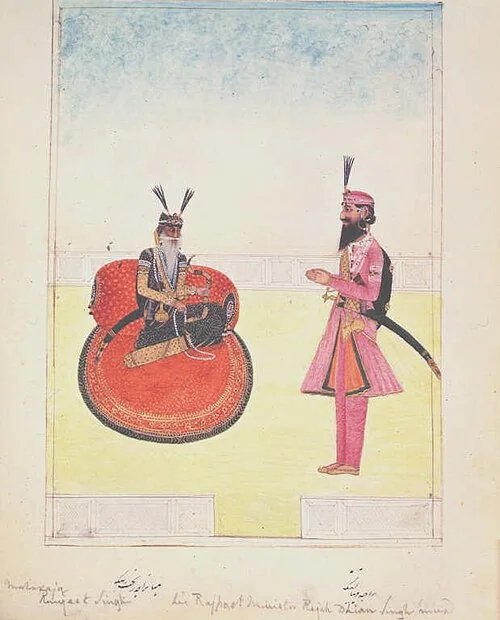
This tension has led to the reshuffle of the Cabinet, as the Rajah Ranjit Singh was pressured to force Dhian Singh to quit from the position of Wazier. However, to the Zamidars disappointment, Dhian Singh and Nawab Kunwar (and the camarilla known as the Dogra brothers) weren't directly fired, but reassigned to new positions of power. Dhian Singh -Raja Ranjit Singh favourite- took place of the position of the Minister of Foreign Affairs in the Cabinet; and the new Wazier Tej Singh, has kept Nawab Kunwar economic role as a conciliatory measure, to Datar Kaur's desillusion with the government.
Now, it seems that Nawab Kunwar, after having been reconfirmed to keep his positions by the new Wazir Tej Singh, has decided to push forward with his controversial interventionist reform despite the weakened position of the capitalist reformers in Internal Affairs and despite the drawback of a staunch and strong opposition by the Zamindars. Datar Kaur has already petitioned for both Nawar Kunwar and Dhian Singh to be fired from their position, and the general Sham Singh Attariwala has decided to go a step further and has implied the possibility of an attempted ____ (redacted).
To sum up, the controversial series of interventionist economic reforms have caused a clear rift in the Khalsa Raj, with the positions as it follows:
Ranjit Singh, Rajah: Neutral, keeping his personal position secret.
Kharak Singh, Chancellor : Asks for caution and a more gradualistic approach to avoid conflict.
Datar Kaur, Leader of the Opposition: Staunchly opposed.
Mahan Singh, Head of the Armed Forces: Asks for caution and has asked all generals to remain neutral and prioritizes the stability of the realm.
Dhian Singh, Minister of Foreign Affairs and former Wazier: Main supporter of the economic reforms.
Tej Singh, Minister of National Affairs: Officially neutral, seems to slightly support the reforms in secret, but he asks for a more cautious approach.
Fakir Aziz ud-Din, Leader of the Shiite Community in Khalsa Raj and Prominent Citizen: Seems to be slightly in favour, though it isn't his main concern.
Shir Bahadur, Prominent Citizen: As part of the Zamidars, he is opposed to the reforms.
Sham Singh Attariwala, General: Extremely opposed, threatens with a coup.
Nawab Kunwar : Main proponer of the interventionist economic reforms.
If we were to try to predict the future, the future of this ambitious economic reform seems unlikely and the chances to pass are scarce, but only time will tell.