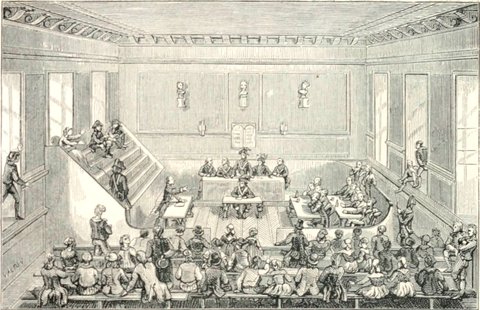
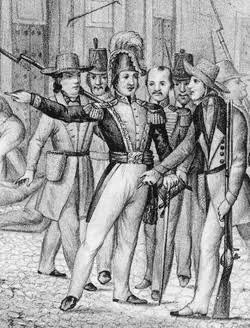
After a month of heated debates between Party Leaders in Houston, the Constitutional Convention has come to a close here in Houston. The first Constitutional Convention was held roughly 30 years ago, with its constitution designed to service only a small Unitary state in New Texas. That old Constitution had since been amended a handful of times during the Lamar administration and serves as the foundation of the new Constitution, but has undergone a few key alterations as a result of the Second Convention.
On governance, the new Constitution, referred to as the 'Federal Constitution', transforms the administrative structure of Texas from a quasi-Unitary system to a formalized Federal system, allowing the territories to be admitted and apportioned house districts and senate seats as states. New Texas and Venezuela are to be admitted as the first two constituent states of this Federal system, expected to be followed shortly by three additional states from the New Granadan territories. To compensate for this expanded voting base, the size of the House has been increased to 150 seats and the Supreme court has been expanded by four seats. The Senate shall have five Senators given to each state. The current government of the Republic of Texas shall be elevated as the Federal government, with its elections expected to continue as-scheduled in 1868. State governments shall have provision governments organized until they can undergo their first elections in 1868 as well. Echols was observed to be hesitant to embrace a Federal model, believing a Unitary system was necessary to keep the people united, but was ultimately swayed to accepting the Federal model on the condition that Federal Law was given defined supremacy over State Law when they overlap.
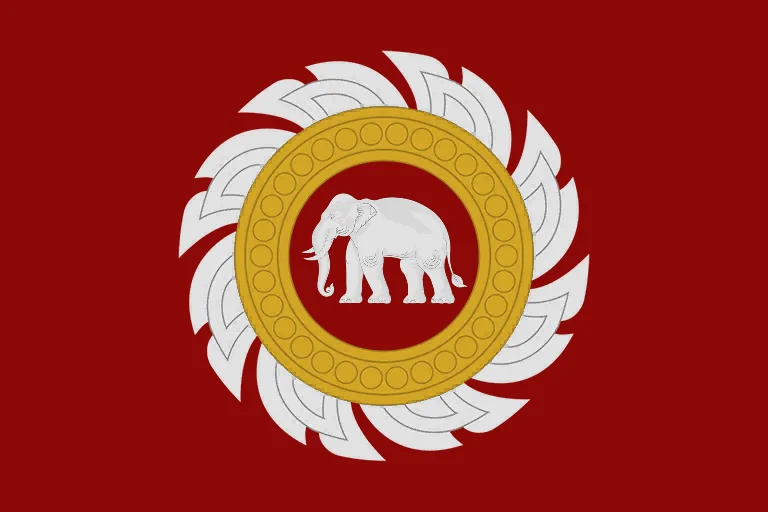
On the Federal Republic's stylings, there was practically a free-for-all separate from party lines over whether it should continue considering itself Texan or instead adopting a Columbian identity. The nascent Columbian population has, in only ten years, exceeded that of Texans across the states and territories, with some estimates placing indicating that, in New Texas alone, they might have outnumbered the descendants of the Original Texans. Ultimately, the free-for-all ended when a compromise put forward by Representative Ladson in a drunken rant was widely accepted, creating the compromise name of 'Texan Columbia'. This attitude of slightly embracing both Texan and Columbian identity carried over through much of the remaining debates, even to the flag of the Federal Republic, which draws inspiration from both Texas' flag and the tricolor of Bolivar's Colombia.
In the falling action of the Convention, a few alterations were made to the articles of the Constitution detailing the rights of its citizens. The first was a small change in language to the article guaranteeing the Freedom of Conscience, which reframes the 'privilege of worshipping God' as the 'opportunity of worshipping a God'. The second was the complete striking of the constitutional protections of slavery, which barred the emancipation of any slave without their master's consent. The third right altered was the right to vote, which now permits the President to, in the times of national emergency, indefinitely suspend elections and appoint temporary representatives to vacant government positions. An attempt to fully remove the anti-sedition amendments of the Lamar administration was also made but ultimately failed, only getting some minor rewrites, though Echols did voice an interest in possibly supporting their repeal after the Federal Republic at some point.
In a closing speech for the Convention, Secretary of State Eden congratulated those present for their hard work representing the people and putting the authority invested in them by the people to good use. He then broke down crying while talking about the incomparable joy and satisfaction in his heart to see himself and his people, the Columbians, fully be recognized and afforded representation as an integral part of the Federal Republic alongside the Texans.
His final quote, I shall repeat to you now, reader.
"Long live the Federal Republic! Long live Texas! Long live Columbia!"








 Texas
Texas