W. M.
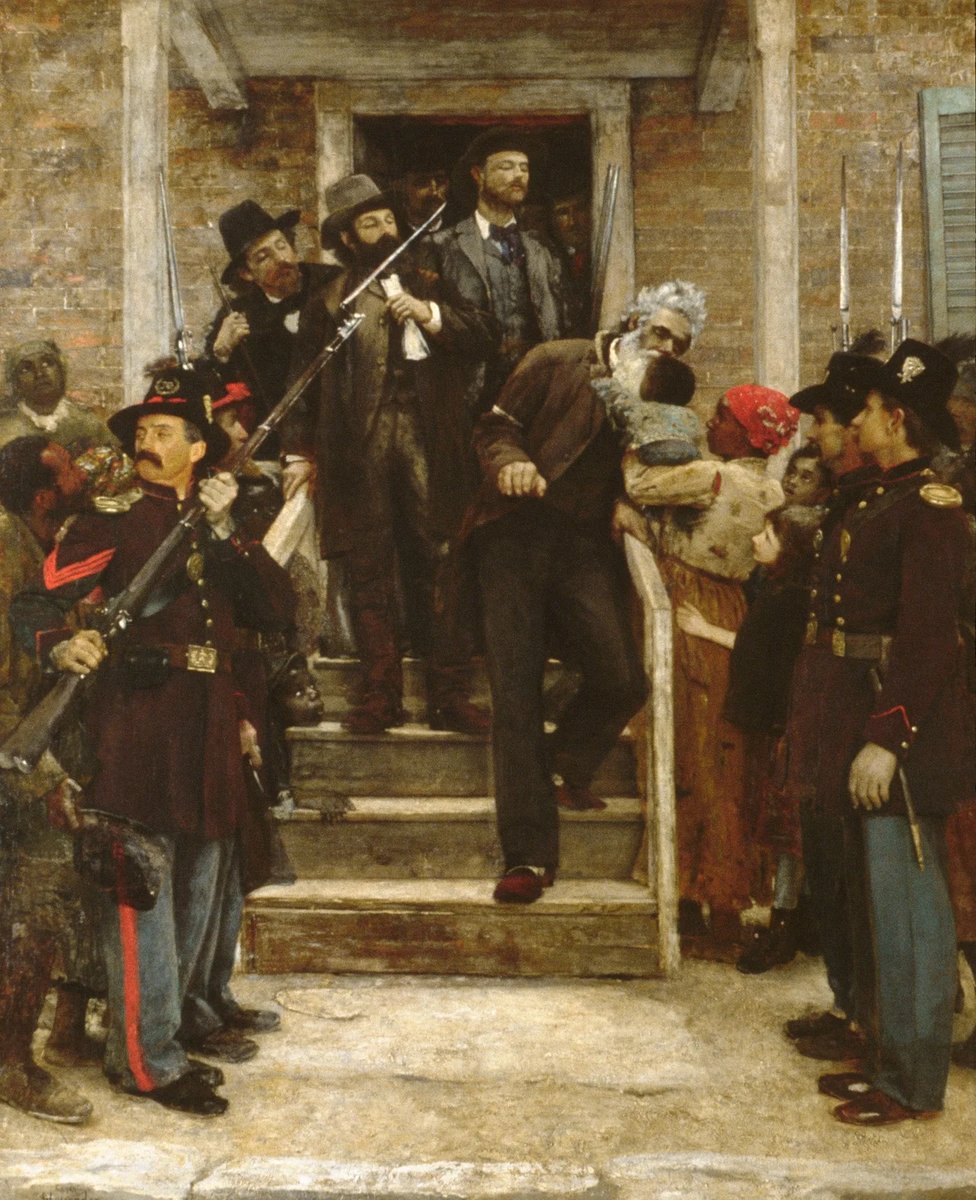
The extraordinary, outbreak at Harper's Ferry, in Virginia, on the night of the 16th of October, 1859, the forcible seizure of the national Arsenal, the capture, imprisonment and killing of the people, and the almost immediate suppression and extermination of the insurgents, are events of historical importance. The madness of the attempt, the boldness--amounting to heroism--of the handful of men who were concerned in the movement, and especially the romantic history and personal character of the chief actor, have awakened in the public mind an ardent desire to know more of the man and his intentions. To gratify this desire, as well as to record, in convenient form, the facts concerning the outbreak and its suppression, with the trial of the leader, John Brown, we have compiled the following pages, aiming only to state the truth in all respects, according to the best sources of information.
CAPT. JOHN BROWN.
John Brown--variously known as "Old Brown," "Fighting Brown," and "Ossawatomie Brown"--made his first public appearance in Lykins County, Kansas, in the year 1855. So strange a career as his has not arrested the public attention since Joe Smith was shot in the Carthage jail. His rank among the world's notabilities will be among such fanatics as Peter the Hermit, who believed himself commissioned of Cod to redeem the Holy Sepulchre from the hands of the infidels--Joanna Southcote, who deemed herself big with the promised Shiloh--Ignatius Loyola, who thought that the Son of Man appeared to him, bearing his cross on his shoulders, and gave him a Latin commission of mighty import--or Don Quixote, who was persuaded that he had a mission to rescue all the persecuted damsels in Spain. It was Brown's idea that he was divinely appointed to bring American Slavery to a sudden and violent end.
JOHN BROWN'S POLITICS.
First, as to John Brown's political opinions. It is asserted that he was a member of the Republican party; but he despised the Republican party. He was opposed to the extension of slavery; and in favor, also, of organized political action against it. But when the Republicans cried, Halt! John Brown said, Forward, march! He was an abolitionist of the ultra school. He had as little sympathy with Garrison as Seward. He believed in human brotherhood and in the God of Battles; he admired Nat Turner as well as George Washington. He could not see that it was heroic to fight against a tax on tea, and endure seven years of warfare for a political right, and a crime to fight in favor of restoring what he considered an outraged race to every birthright with which their Maker had endowed them. The recent outbreak was premature. The coming triumph of the Republican party was the most powerful reason for the precipitate movement. The old man distrusted the Republican leaders; he said that their success would be a backward movement to the anti-slavery enterprise. His reason was, that the masses of the people had confidence in these leaders; and would believe that by their action they would ultimately and peaceably abolish slavery. That the people would be deceived, that the Republicans would become as conservative of slavery as the Democrats themselves, he sincerely believed. Apathy to the welfare of the slave would follow; hence, he argued, it was necessary to strike a blow at once.
...
The Verdict
After recapitulating his offences set forth in the indictment, the Clerk of the Court said:
Gentlemen of the Jury, what say you, is the prisoner at the bar, John Brown, guilty Or not guilty?
Foreman--Guilty.
Clerk--Guilty of treason, and conspiring and advising with slaves and others to rebel and murder in the first degree?
Foreman--Yes.
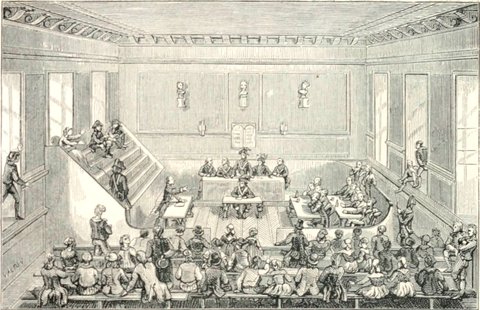
Not the the slightest sound Was heard in the vast crowd as this verdict was thus returned and read. Not the slightest expression of elation or triumph was uttered from the hundreds present, who, a moment before, outside the court, joined in heaping threats and imprecations on his head; nor was this strange silence interrupted during the whole of the time occupied by the forms of the Court.
The Court gave his decision on the motion for an arrest of judgment, overruling the objections made. In the objection that treason cannot be committed against a State, he ruled that wherever allegiance is due, treason may be committed. Most of the States have passed laws against treason. The objections as to the form of the verdict rendered, the Court also regarded as insufficient.
The Clerk then asked Mr. Brown whether he had anything to say why sentence should not be pronounced upon him.
John Brown's last speech
Mr. Brown immediately rose, and in a clear, distinct voice, said:
"I have, may it please the Court, a few words to say. In the first place, I deny everything but what I have all along admitted, of a design on my part to free slaves. I intended certainly to have made a clean thing of that matter, as I did last winter when I went into Missouri, and there took slaves without the snapping of a gun on either side, moving them through the country, and finally leaving them in Canada. I designed to have done the same thing again on a larger scale.
That was all I intended to do. I never did intend murder or treason, or the destruction of property, or to excite or incite the slaves to rebellion, or to make insurrection. I have another objection, and that is that it is unjust that I should suffer such a penalty. Had I interfered in the manner which I admit, and which I admit has been fairly proved--for I admire the truthfulness and candor of the greater portion of the witnesses who have testified in this case--had I so interfered in behalf of the rich, the powerful, the intelligent, the so-called great, or in behalf of any of their friends, either father, mother, brother, sister, wife, or children, or any of that class, and suffered and sacrificed what I have in this interference, it would have been all right, and every man in this Court would have deemed it an act worthy of reward rather than punishment. This Court acknowledges, too, as I suppose, the validity of the law of God.
I see a book kissed, which I suppose to be the Bible, or at least the New Testament, which teaches me that all things whatsoever I would that men should do to me, I should do even so to them. It teaches me further to remember them that are in bonds as bound with them. I endeavored to act up to that instruction. I any I am yet too young to understand that God is any respecter of persons. I believe that to have interfered as I have done, as I have always freely admitted I have done in behalf of His despised poor, is no wrong, but right. Now, if it is deemed necessary that I should forfeit my life for the furtherance of the ends of justice, and mingle my blood farther with the blood of my children and with the blood of millions in this slave country whose rights are disregarded by wicked, cruel, and unjust enactments, I say let it be done. Let me say one word further.
I feel entirely satisfied with the treatment I have received on my trial. Considering all the circumstances, it has been more generous than I expected. But I feel no consciousness of guilt. I have stated from the first what was my intention, and what was not. I never had any design against the liberty of any person, nor any disposition to commit treason or excite slaves to rebel or make any general insurrection. I never encouraged any man to do so, but always discouraged any idea of that kind. Let me say also in regard to the statements made by some of those who were connected with me, I fear it has been stated by some of them that I have induced them to join me, but the contrary is true.
I do not say this to injure them, but as regretting their weakness. Not one but Joined me of his own accord, and the greater part at their own expense. A number of them I never saw, and never had a word of conversation with till the day they came to me, and that was for the purpose I have stated. Now, I am done."