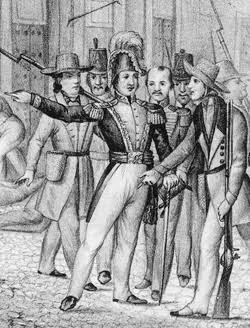
Though Lothar Seebach has the support of most of the nation, he is losing support of the armed forces, report Iris consultants in Honduras.
After catapulting himself into prominence by taking advantage of former president Morazán's lapse in political judgment and seizing control of the Liberal Party, President Seebach has fully cemented the Central American academic scene as the leaders of the liberals. This was a welcome change for rich men, moderates, and honest conservatives, who all stood to gain from moving out of the shadow of the central army. The army itself, though initially supportive of the new administration, has grown more and more irritated by its loss of cachet.
President Seebach's many reforms, from the adoption of the Mexican university model to the reduction of the civil branch of the army in favor of an independent police force, have had the net effect of significantly reducing the role of generals and commanders in Central American politics. Though left in control of the the army he established, the aging Morazán is reportedly fulfilling his orders with more and more delays. Several congressmen, too, have refused to represent the districts that used to be full of militiamen and are now composed of an entirely different constituency. Seebach has not yet made any statement about these developments.
Even the members of the armed forces who kept loyal to the Seebach administration, out of commitment to the Liberal Party or otherwise, are beginning to lose their patience. The president's recent proclamation of friendship has ruffled the feathers of the army and navy, who consider the initiative naive and short-sighted. "...Texas, who killed so many Central American men, Brazil, who made Central America out to be some backwater... How could they possibly be friends of the federation..? Worse still are the outreaches to Spain and the Baltic Governances. Why should Central America talk calmly with its claimant, or allow the European to steal away its history?" - excerpt from a speech by congressional delegate Félix Ferrera. Such hostile rhetoric has become all too commonplace among the martial men who still attend Congress.
More troubling still is the organization of the men who abandoned the country after Seebach's electoral victory. Though the president has repeatedly stated they left of their own free well, these bought politicians continue to insist they had no choice but to leave. A number of them have reportedly organized together in Cuba, conspiring to reinstate Morazán and his army in San Salvador under the direction of his nephew, Máximo. The Morazán faction, as they have come to be known, plan to forcibly reinstate the former president without an election. Morazán, like Seebach, has as of yet chosen not to comment on this development.
The Iris trusts that president Seebach will guide the country fairly, as he has thus far, and pacify the armed forces before their unhelpful saber-rattling can set back the nation's progress.



























 Brazil