The Ottoman Empire has emerged from a decade and a half of extraordinary transformation. What had originally begun with the Gülhane Edict of 1836 as an attempt to preserve the imperial state through administrative reform, has become a near-complete reorganization of Ottoman political, legal, and social life. The words of Mahmud II made manifest - "Peace at Home, Peace in the World".
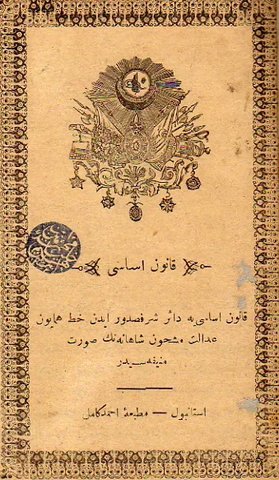
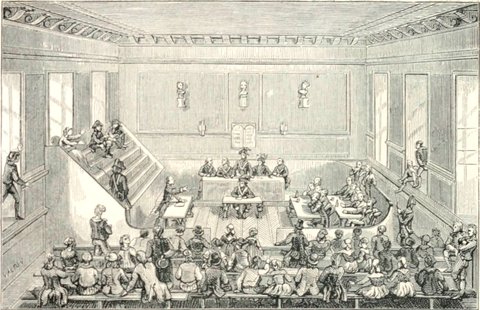
The most important achievement of the Tanzimat so far was the creation of a unified imperial system of justice. Many old divisions existed between the jurisdiction of religious courts, regional courts, and the Sultan's administrative courts. This system was gradually replaced by a hierarchy of courts operating according to codified Ottoman law, much of which was based around the French system - with the Sultan being influenced by the Pro-French Lobby. The new Imperial Courts of Justice heard criminal, commercial, and civil cases according to standardized codes. The existing sharia courts retained authority over matters of personal and religious status, but their decisions were subject to defined procedures and appeals. Judges were increasingly trained in state law as well as Islamic law, and professional prosecutors and advocates were introduced. The Penal Code, Commercial Code, and subsequent civil legislation were consolidated into a coherent imperial legal system. The principle announced by the former Sultan, that of "Peace at Home, Peace in the World" - that every Ottoman subject possessed security of life, honor, and property - was transformed from an imperial promise into enforceable law.
Judicial reform is soon to be accompanied by the creation of a professional Imperial Police Service. Before now, security has depended heavily upon local officials and military units - which has resulted in numerous cases of excessive force upon the citizenry, worsening cultural divides. Police officers will soon receive standardized training and salaries from the state, with their duties defined by law and backed by a completely overhauled judicial system. Torture, arbitrary detention, and the seizure of property by policing officials are all to be formally prohibited. This new reform will also created a clearer distinction between military and civilian authority. Soldiers will no longer routinely perform ordinary policing, and provincial officials are prohibited from maintaining private armed forces.
With all the new judicial and policing reform, an educated citizenry is necessary with which to enact and enforce the new laws. Mahmud II was not a stranger to this need – and thereby one of his last acts before his passing was the establishment of Private institutions across the nation, partially subsidized by the central government. These notably did not mandate religious teachings, for this was a multicultural empire and the Millet system already provided religious exemptions for many communities.
Fiscal reform was essential to the entire project. An empire runs on its coffers – and the Ottoman ones were strained after a war with Russia, alongside Persia and Britain. The old tax-farming system had allowed private contractors and provincial notables to collect taxes, frequently creating opportunities for arbitrary exactions and local magnates causing ‘inefficiencies’. The Gülhane program explicitly called for regular taxation, and the land taxes were reduced in favor of income-based taxation and taxing the wealthier citizens generally. Provincial tax registers are standardized, while annual audits are introduced to prevent officials from concealing revenue. Taxpayers receive receipts and possess a legal right to challenge assessments before the new administrative courts.
With this came the reform of the land ownerships - Land categories are formally registered, inheritance and transfer are regulated, and private ownership receives stronger legal protections. Workers are no longer tied to their landowners, and may find alternative employment elsewhere (provided they are not enslaved). This created a new Ottoman property-owning class: farmers, merchants, professionals and provincial Magnates, rather than just the nobility. This new class possess legally documented titles and therefore have a direct interest in the stability of the reformed state.
Slavery was the clear next question in regards to this new landowning class, for if the laborers and serfs who once were owned by the nobles were granted freedoms – what of the enslaved peoples themselves? On this, Sultan Mahmud never answered before his death. Abdülmecid Osmanoglu, his preeminent heir – took up the answer. One of his first actions as the new Sultan was to ban the continued import of enslaved peoples, though he stopped short of banning the use of slaves entirely – fearing a revolt of the powerful landholding nobility. While this was not the complete reform that was necessary, the new Sultan has not given up on this task yet and will revisit the matter very soon.
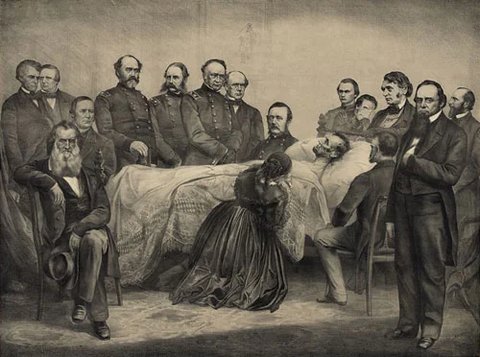
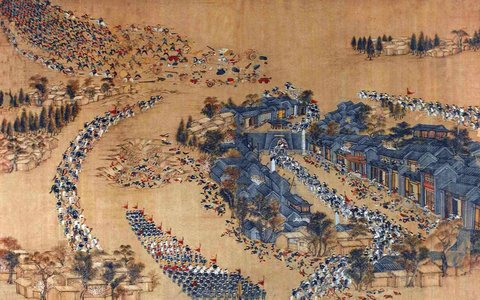
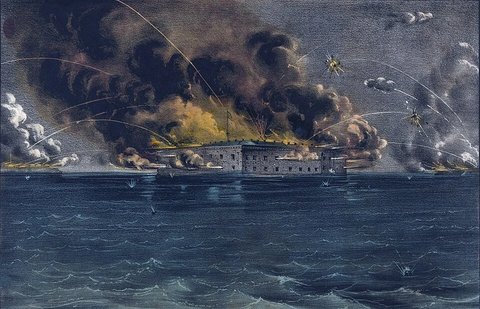
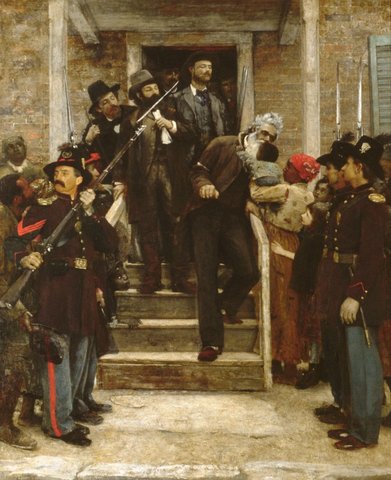
Finally, the initial wave of Tanzimat reforms were completed – and the Question of Egyptian Loyalty once more reared it’s ugly head. The Egyptians under Ali promised loyalty for as long as the reforms promised in the Conference of Paris continued, of which they evidently were. However, when confronted with the evidence of such – along with the Sultans permission to conquer the disparate tribes of Arabia – the request to reaffirm their loyalty and swear vassalage once more to the Sutan was rejected. This cannot stand, for if Ali’s son is just as disloyal and opportunistic as him – there must be repercussions. The Agreement that the Syrian and Levant was promised to them for their continued loyalty was considered defunct, and the Ottoman forces marshalled alongside the Iranian and the Austrians to put an end to this farce of ‘loyalty’ to their liege. The civil war was brutal, with the French providing aid to the Egyptian forces – but in short order Cairo was captured and the men who demanded independence from the Sultan and the end to the Caliphate was sent to trial, found guilty, and crucified in accordance with Islamic Law regarding Apostacy – as this was a religious matter rather than a civil one (due to his demands for the Sultan to renounce the Caliphate) he was executed in a religious manner rather than sentenced to life in prison or guillotined (per the French influence for capital punishment with the Judicial system).
Though there is still much reform to be done - as well as catching up to it’s European peers in technology and industrialization – there is no question that the Ottoman Empire is no longer ‘The Sick Man of Europe’, with a breakneck pace of reform in the last 20 years that make any educated individual admit to the progress that has been made. With Egypt restored to effective imperial control, slavery reduced and headed toward abolition, property rights codified, taxation centralized, education expanded, and justice increasingly administered through common state institutions - the reforms of 1836 through 1856 have achieved their central purpose: the transformation of the Ottoman Empire from a loosely administered dynastic empire into a centralized, legally ordered Ottoman state.