First War: Anglo-Basuto Conflict (1838-1839)
Colonial Administrator Sir Benjamin D'Urban declared war on the Basutoland Kingdom to bring their lands under British directive and continue civilizing the cape. D'Urban had expanded and developed the colony's Mounted Rifleman brigade to be it's largest fighting force in history yet. With several more cavalry units and infantry to provide them with a proper frontline, they marched for the Basutoland border.
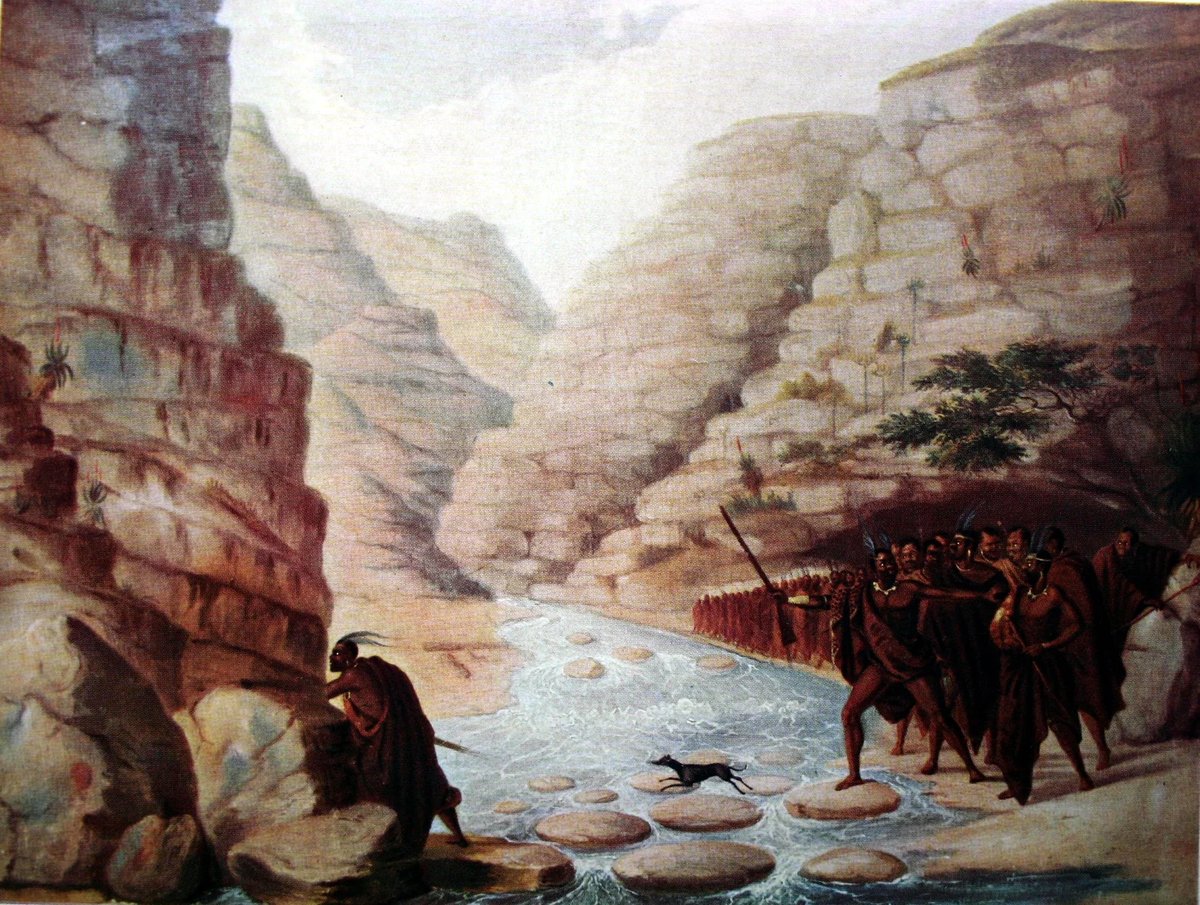
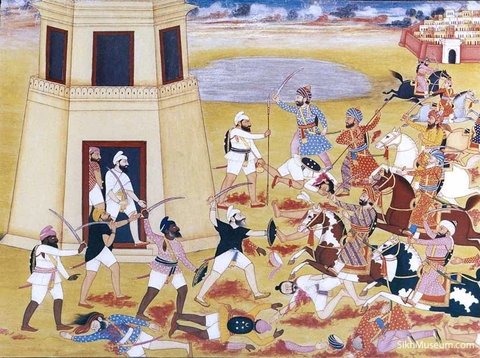
Managed by Sir General Roland Willem Reinstorf, the brigade began their invasion in May, shortly before the heat of the African summer. The terrain of the Basutoland Kingdom was rough. The kingdom was situated right along the Maloti Mountains. However, Sir General Reinstorf was an expert offensive officer. He used the mountainous passes to his advantage, setting up trap after trap for the Basuto Warriors to walk into. Gunfire would rain down upon them as the Mounted Rifleman Brigade would continue pushing and occupying more territory. They would push their way through the rigorous terrain slowly before finally making it to the capital city, Maseru, where they put the city under siege for two weeks. Once all enemy combatants were dealt with, the Sir General Reinstorf reported back to Sir Benjamin D'Urban that King Moshoeshoe I had surrendered.
The Basotho government were arrested and sent into exile where the majority fled to the Merina Kingdom to live out their days. Following the end of the conflict, local english police forces arrived to begin the integration and occupation process of the territory joining the Cape Colony. However, the territory would lack any civilized infrastructure as the conflict was merely a means to get to the real conflict that faced the Cape Colony, the Zulu tribe along the Natal Coast.
Fighting their way through Xhosa territory was always a possibility, but Sir Benjamin D'Urban sought a faster path towards Natalia. The Xhosa would fall under the Cape eventually, but acquiring the Natal Coast was necessary now. And so, the annexation of the Basutoland Kingdom for a rough border with the Zulu was the given opportunity.
Second War: the boer rebellion (1839)
Following the Anglo-Basuto War, Sir Benjamin D'Urban was quick to keep the Mounted Rifleman Brigade on the front lines to continue the Cape Colony's push into the Natal Coast. However, the situation had changed during the Anglo-Basuto War.
The Zulu Tribe had faced a Boer Rebellion. Their lands were divided. The Boers, that remained under rule of the Zulu after the Netherlands left the Cape and Natalia, had risen up against the Zulu Warriors and their King, Dingane. Sir Benjamin D'Urban wouldn't know of these events until after the Boers had won their fight. However, the end goal had not changed.
Ultimately, this conflict posed an even greater threat and Sir Benjamin D'Urban found an even greater desire for the Colony to assume control of the Natal Coast. The Zulu would never let this new boer state rest. There would be countless raids against it, creating famine and destruction to the coastal region. In order for there to peace along the coast, the British had to pacify the boers and deal with the Zulu as soon as possible.
And so, Sir Benjamin D'Urban declared a state of war against the Boer Rebellion of Natalia, issuing an ultimatum to the upstart government to submit to the will of the British Crown or be exiled from these lands. D'Urban put out a strongly worded message insinuating that the Boer Republic did not have the resources to fight off the Zulu forever and that it would only be a matter of time until they would be under the heel of King Dingane again. And all that would be shown for it would be famine and destruction of the region that they call home.
However, the republican government was stubborn and did not see reason to the British demands. And so, D'Urban sent in the Mounted Rifleman Brigade to subdue to the upstart government.
Riding off the success of the Anglo-Basuto War, Sir General Roland Willem Reinstorf continued to command the brigade, leading to probably his quickest occupation yet. As soon as the Mounted Rifleman Brigade managed to carve their own path through the Maloti Mountains that they now occupied, it became a quick descent down to the village of Pietermaritzburg where the siege of the Natalian capital lasted all but two days.
The Boer citizens were quick to point out to the British cavalry where the government officials were. They wanted no trouble. They merely wanted protection from the Zulu. The Brigade would make quick work in finding and arresting the government leaders, leading to the state's inevitable surrender.
Most of the leaders would find themselves exiled to either the Netherlands, Belgium or the remaining, more-established Boer republics.
However, following this war, the Cape Colony would make a change. This conflict was not as popular as D'Urban would have hoped. The Mounted Rifleman Brigade was racking up quite the debt for the meager British colony. And with the wars in India being tax back home for Her Majesty Queen Victoria, the Cape Colony had no help to pay off her war debt.
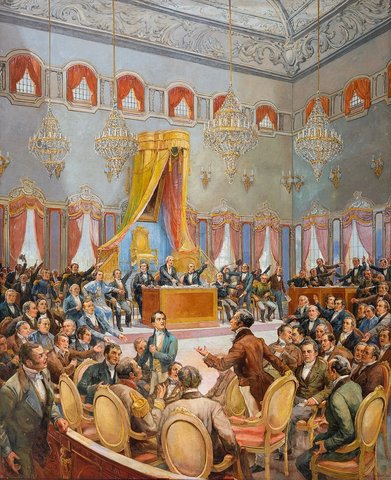
D'Urban faced mounting scrutiny from the elected minor legislative council, in particular Sir Robert Godlonton. The council was quick to vote in a new form of government that stripped D'Urban of the majority of his head of state powers, expanding the legislative council with more elected landed, literate white citizens of the colony and vesting the head of the council as the greater colonial leader.
The Governor-General would still be appointed by HMS and still be allowed to veto any legislation that would act in disservice to the crown; however, in terms of D'Urban's power, he was out.
third War: anglo-zulu conflict (1843-1845)
Following the Boer Rebellion Pacification and D'Urban's ousting, the Cape Colony would settle for a few years to pay off it's debts and re-manage the colony. The Mounted Rifleman Brigade would be the first to be restructured from the D'Urban administration.
The resources required to maintain the horses and train the cavalry units were immense. Sir Robert Godlonton believed the colony could defend and expand it's borders with less resources and greater strategic planning. After all, they did have Sir General Roland Willem Reinstorf. With his intellect, Godlonton believed that a brigade of solely infantry could easily maneuver around the Zulu rump state.
This change alone would solve much of the colony's financial problems. The debt was slowly being paid off as interest payments were prioritized first, netting the colony further income.
Once things felt stable again, Sir Robert Godlonton was ready to test his new Colonial Riflemen Brigade to annex the remaining Natal Coast and pacify the Zulu Warriors once and for all.
And so, in March of 1843, Sir Governor Godlonton issued an ultimatum for the Zulu government to submit to the will of the British government and be annexed into the Cape Colony. Without hesitation, it was denied. And the Zulu Warriors were quick to begin mobilizing and raiding the border in the Natal Coast.
This conflict was all but inevitable. However, this war would show that Sir Robert Godlonton's hubris was over-measured. He assumed that the Zulu rump state was in a rather disarrayed state and that all they had in them were meager border raids that would, in the long term, cause long-lasting devastation. But to King, this was a fight for survival and Godlonton underestimated their willingness to go all out.
Sir Governor Godlonton did not mobilize the Colonial Rifleman until the last minute when they still had to travel from Capetown all the way to the Natal Coast. This proved to be a massive blunder, allowing the Zulu to get ahead start in re-occupying portions of Natalia. Portions that the colony would have to re-take once more. Sir General Reinstorf was furious at Godlonton for this delay in mobilization.
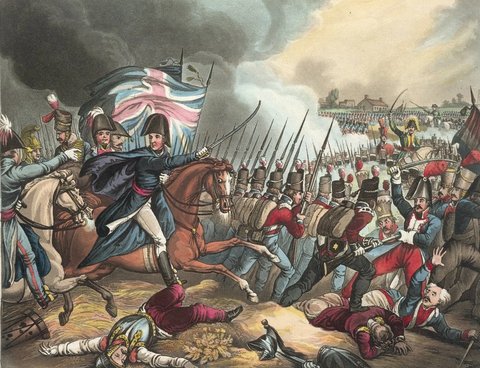
However, once the General arrived to the front lines, it was quite evident that the Zulu Warriors were outmatched. Sir General Reinstorf truly was D'Urban's greatest appointment to the military as he would easily take back the Zulu occupations while simultaneously pushing the front forward into Zulu territory. Of course, this would make the conflict slower and more stressful for the General as he would make up for lost ground. But it was a feat of a genuine war hero.
After about five months of front line battles, Sir General Reinstorf's brigade would make it's way to the capital city of Ulundi where they would siege the city for another three weeks. Inevitably, they would capture King Dingane and the Zulu government would surrender to the British Cape Colony.\
Following their surrender, King Dingane would be tried and hung for his act of defiance against the British Crown. Meanwhile, the remaining loyal government officials to King Dingane would be sent into exile where many would cross the border into the Gaza Kingdom or sail across the channel to the Merina Kingdom.
Once the war was officially over, local police would be established to maintain and assert control over the state of Natalia now totally under control of the Cape Colony. However, due to Sir Governor Godlonton's arrogance, his power base back in Cape Town had eroded.
Sir General Roland Willem Reinstorf would use his entire political capital and influence as a war hero to ruin Sir Robert Godlonton. He would tarnish his name, left and right. The Conservative Party that Godlonton established would no longer trust the very same man. He may had been fiscal, but he was a terrible administrator. And yet Robert Godlonton was the Conservative Party.
When 1846 rolled around, the colony's second ever elections were to be held. And Sir General Reinstorf would work with Godlonton's longtime rival, Representative John Fairburn, to get his Liberal Party elected enough seats in the Council to replace Godlonton with John Fairburn.
As we approach election day, the race is very close. Despite Sir Governor Godlonton's tanking popularity, conservative landowners are still faced with voting for their beliefs versus a bonafide, military-backed liberal. Sir General Reinstorf's endorsement seems to mean quite a lot as John Fairburn's party leads Godlonton's party. However, a swift surprise could change the race and out-politically maneuver the General's PR campaign against Governor Godlonton.




































 Merina Kingdom