Politics & SocietyEconomy
Player Submission
🔥 1
1835 · The Shattered Congress
By player
Central & Northern EuropeEastern Europe & Balkans
 Greece
Greece is both a new and old nation yet one with a history that dates back thousands of years. From the heights of antiquity and being a key part of the greatest empire to ever exist, to the lows of enslavement to the Ottoman oppressors. Yet now after much bloodshed and suffering the Greek people have finally regained their independence in 1830. Yet despite this hard-won freedom things are not well in the small nation. With a foreign Bavarian king who upon ascension was merely a boy in his infancy and his regency council that all but turned the people against them. The council did its best to stamp down on the traditions of the Greek peoples, going so far as to close its monasteries and even sentence some of its greatest heroes of the revolution to death. Worse than this the taxes imposed on the Greek people were as harsh as those under Ottoman tyranny making many seek the overthrowing of the young monarchy.
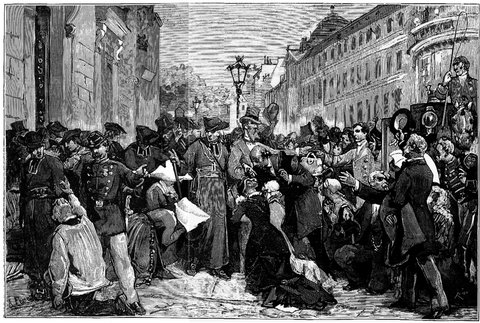
Yet these taxes were only in place due to the demands of Britain and the Rothschild bank who demanded extortionate amount of money in return for Greek independence. This all came to ahead in 1835 where the now of age king Otto von Wittelsbach dissolved the council taking power himself and rescinding much of the orders of the council. This stopped all out revolution, but tensions still remained as the regent and leader of the Council Josef Ludwig von Armansperg was still given power as Arch-Chancellor. Deeply hated by the Greek people, the new Arch-Chancellor has been in his position for less than a year but in this time has only gained the continued ire of the people and the king, who he has spent much time undermining including to his own father in Bavaria.
Otto himself is not without criticism, as a young man he is unmarried and has no heir something that troubles the Greek people. Worse however is the fact he is a catholic who the most devout in the nation consider a heretic making his ability to rule the Greeks called into question. Additionally, while most great powers guarantee the new states sovereignty, many Greeks and Greek land is still held in slavery to the ottomans something that angers the Greek people to no end.
With an unpopular government, rising Greek nationalism, his own religion, a crippled economy, an entire nation to create from scratch, and an existential enemy to the north and east, the future of the Greek Kingdom looks dark. Yet all is not lost, the Great powers still protect them, and Otto knows he will need to make allies out of them if he has any hope of ruling this land well. He also knows that the day may come where he will have to make hard decisions on his own future if he hopes to keep his crown. Yet this is a task he is willing to preform, having already thrown himself into the reviving Athens as a true city and the new capital of the kingdom.
If Otto can navigate the treacherous waters remains to be seen, yet it’s clear that if he can then the Greek peoples may yet have the hope they lost return to them, or perhaps he will fail, and the nation thrown into further uncertainty.